Introduction to Photography Classroom Observation
Hayleigh began by establishing a supportive and inclusive learning environment. She opened with a five minute free writing activity and encouraged students to introduce themselves to one another. This helped bridge connections between home and international students and lowered early social barriers.
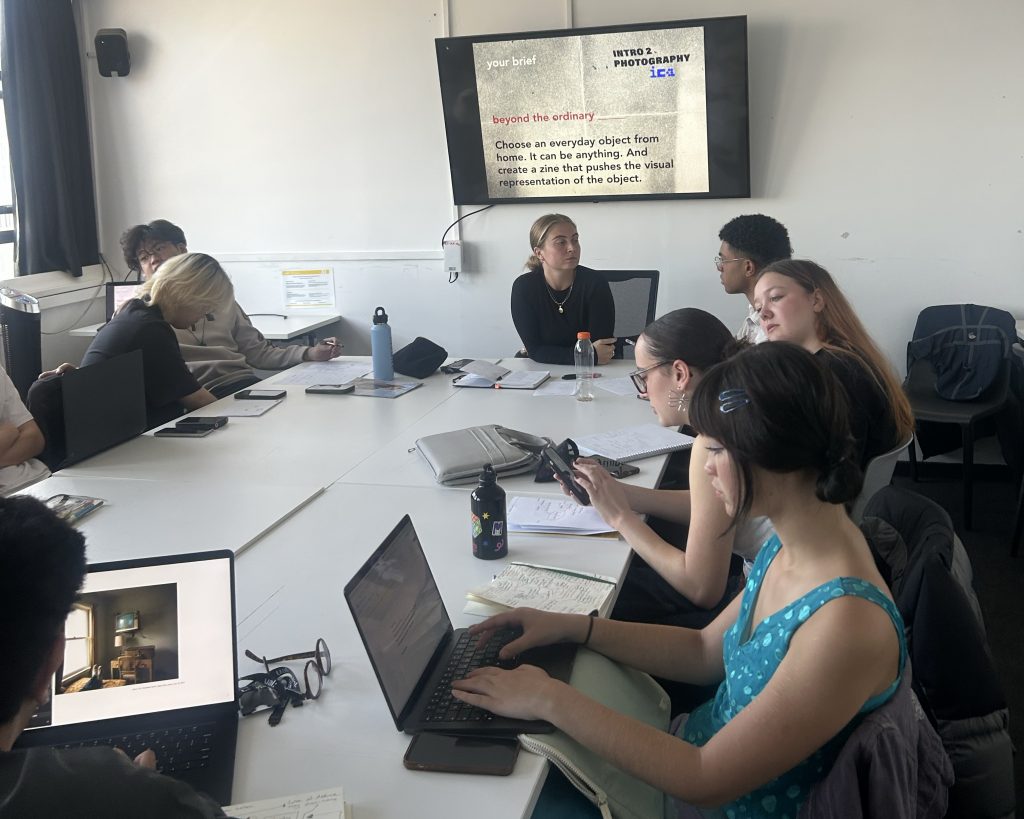
During the first seminar following the industry briefing, I observed Hayleigh Longman’s initial session with the new first year group. This was the students’ first class after being introduced to the ICA collaboration, and was a good opportunity for me to observe the student reposes to the brief and gather informal feedback for this ARP unit on the PgCert.
The tone of the session was calm and constructive, with space for curiosity and questions about the brief. Hayleigh reassured students about the value of their ideas while gently guiding discussion back to the project aims. The lesson incorporated short, structured writing exercises, from identity based prompts (childhood objects, food from home) to a timed creative task with playful word cues. These activities offered students low stakes entry points into ideation, providing a bank of material to draw from as they begin developing work for a professional context.

Student comments:
‘Do we work with brands and galleries on all of the units?’
‘Are they going to judge us on the collaboration?’
‘Who is marking this work – the lecturers or the ICA staff?’
What stood out was how this workshop style approach supported students in building confidence before stepping into the ICA space. While the collaboration introduces an industry level challenge from week one, the supportive classroom atmosphere, combined with creative writing strategies drawn from Hayleigh’s recent poetry workshops, helped students feel grounded and capable. This early scaffolding appears to play a key role in preparing students for industry expectations by nurturing creative resilience, voice, and peer connection at the outset of the unit.