In Perceptions, Processes and Practices around Learning in an Art Gallery, Pringle and DeWitt (2014) argue that learning in the gallery context can be understood as a transformative and dialogic process. A distinctive feature of learning at Tate is the central role of artists and artistic practice. Staff identify strong parallels between making art and learning: both involve experimentation, critical thinking, reflection, and questioning. Direct engagement with art and artists, rather than simply viewing artworks or receiving interpretative information, is positioned as essential for deep and meaningful learning.
This post both complements, and in some ways acts as a counterpoint to, my earlier blog post, Bringing the Industry to the Classroom. I am particularly interested in Pringle and DeWitt’s suggestion that the gallery can operate as a unique creative environment, one that shifts the conditions of learning.
For Introduction to Photography, I took the classroom to the ICA on two occasions. By utilising gallery spaces as sites of teaching, students were able to interact directly with artworks, artists’ moving image, and institutional staff, rather than encountering work solely through books or digital reproductions. The change in environment subtly altered the dynamic of discussion and observation, situating students within a live cultural context.
Gallery Visit One
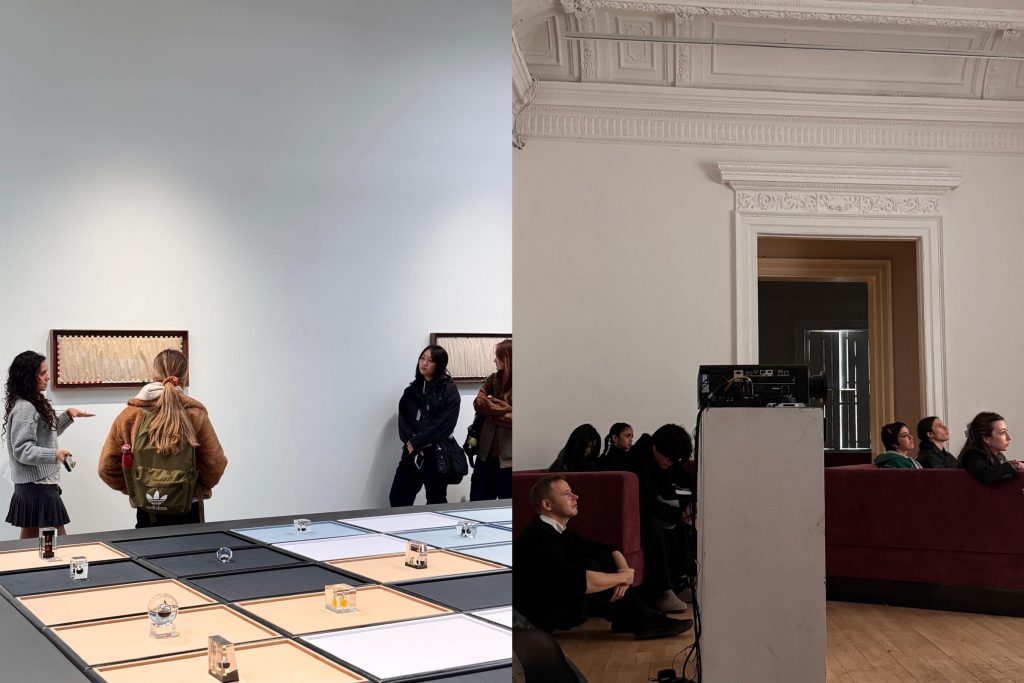
On the first visit, the group was divided into three sections, rotating through different parts of the gallery programme.
- Group A began with Morale Patch, a newly commissioned exhibition by Tanoa Sasraku.
- Group B visited the upstairs gallery space to view a programme of short films presented in conjunction with Frieze.
- Group C attended a session in the Learning Rooms with Hannah Geddes, Talks and Engagement Programme Lead at the ICA.
This structure allowed students to encounter the gallery through multiple modes: exhibition viewing, moving image, and institutional dialogue. The rotation encouraged discussion across groups afterwards, as each returned with a different experience of the space.
Gallery Visit Two
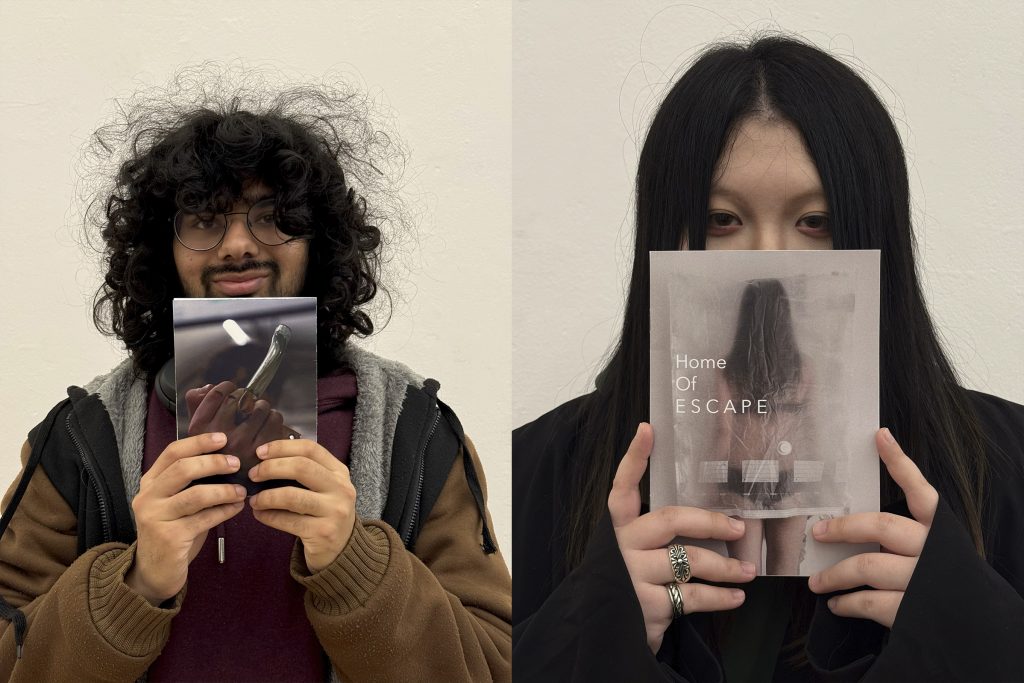
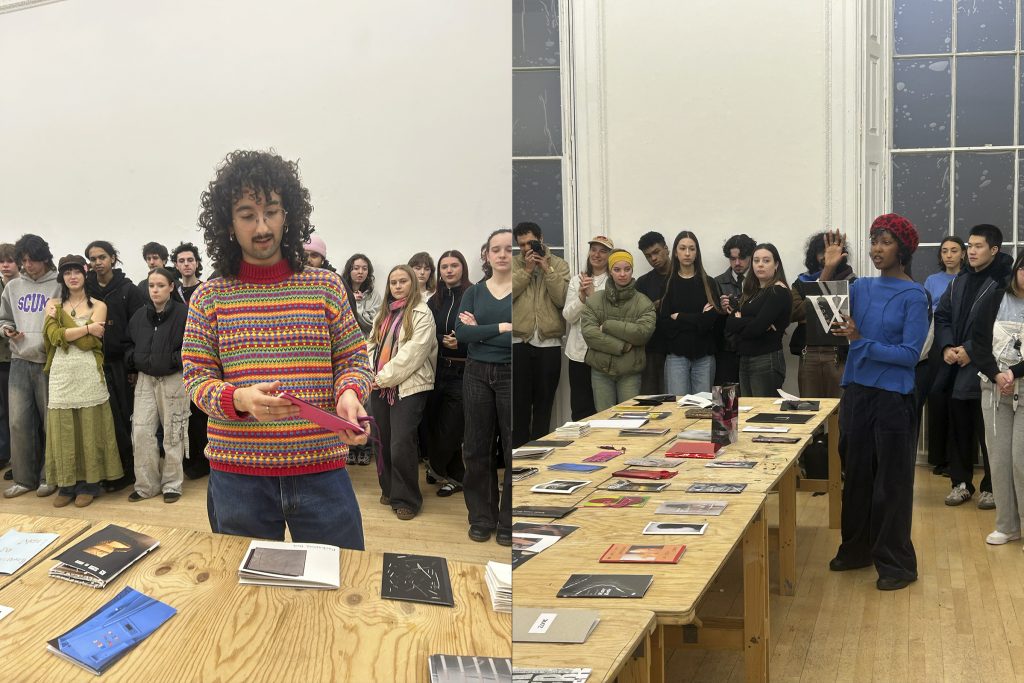
The second visit focused on exhibiting the work students had produced in response to the ICA brief. Students presented their zines to ICA staff and two members of the ICA Youth Collective.
The ICA Youth Collective is a six-month programme offering paid opportunities for young people aged 16–30. For this project, two Youth Collective members were engaged as Student Leaders. While this provided professional development for them, it also served an important pedagogic function. They acted as a bridge between first-year students and ICA staff, mediating discussion and offering peer-informed perspectives.
Students received verbal feedback directly from ICA representatives on their projects. This moment shifted the dynamic from simulated industry engagement to live dialogue, reinforcing the authenticity of the brief and situating student work within a professional context.
Pringle, E. and DeWitt, J. (2014) ‘Perceptions, processes and practices around learning in an art gallery’, Tate Papers, 22. Available at: https://www.tate.org.uk/research/tate-papers/22/perceptions-processes-and-practices-around-learning-in-an-art-gallery (Accessed: 21 January 2026)